

By John Spencer
Is Israel Safer Today?
It is hard to call any war's outcome while it is still happening. Anyone who tells you otherwise is either not paying attention or not being straight with you. But that is different from refusing to ask the question at all. So here it is, plainly: Is Israel safer today, from a national security standpoint, than it was on October 6, 2023? The answer is yes.
That will be uncomfortable for some people to read. The grief of October 7 has not faded. The cost in Israeli lives, in soldiers killed across multiple fronts, in hostages taken and the years required to bring them home, was real and enormous. But national security is not measured in these factors. It is measured in relative capability, freedom of action, and the ability to deter or defeat threats. It is measured in threats eliminated, enemies degraded, and the military balance shifted. On those terms, what has happened since October 7 is something few strategic analysts would have predicted when the smoke was still rising over Southern Israel.
The strategic paradigms that governed the Middle East for decades have shifted. Not all of them. Not fully. But the shift is real, larger than is yet fully understood, and Israel drove it.
The End of Containment
Before October 7, a certain logic governed how threats to Israel were managed: contain, deter, respond proportionally. The basic assumption was that acting decisively against clearly growing threats, such as Hezbollah's missile buildup and Iran's nuclear program, would trigger a larger war nobody wanted. So the threats were tolerated and managed. Calibrated responses to provocations were limited to avoid escalation or trigger a broader strategic dilemma with international partners but strong enough to show resolve. Rocket diplomacy. Both sides understood the basic rules. Israel played within them while Iran and proxies plotted to grow within them until they achieved the point they felt ready to attack.
Over years of recurring attacks, this de facto system of constrained escalation had taken hold. Violence became routine, escalation remained bounded, and major war was avoided despite repeated provocations and growth of Israel’s adversaries. That pattern reinforced a dangerous assumption among those adversaries: that Israel's strategic freedom of action was structurally limited, that its air defenses could absorb sustained punishment, and that international pressure would constrain it to proportional responses even after severe attacks. Hamas internalized the belief that even a dramatic assault would fold into the established cycle of retaliation rather than trigger a fundamental shift.
With Iran's support and awareness, Hamas unleashed the greatest attack on Jewish people since the Holocaust, October 7, that ended the decades-long status quo on every front. What replaced it will define the region for a generation. In effect, Israel’s adversaries came to believe that escalation thresholds were fixed and that Israel would operate within them regardless of provocation.
Iran: The Twelve-Day War and What Came After
Major moves came in April and October 2024, when Iran openly attacked Israel, including what was the largest ballistic missile attack ever launched by one state against another. Then, in June 2025, acting unilaterally, Israel launched Operation Rising Lion, a twelve-day campaign against Iran that stunned the world. On the opening nightalone, the Israeli Air Force flew more than 200 fighter jets in five waves of strikes, dropping over 330 munitions against roughly 100 targets. These included the Natanz Enrichment Complex and sites in Tehran, Tabriz, Hamadan, Qom, Isfahan, and Kermanshah. In the first hours of the operation, at least 20 senior Iranian military commanders and numerous nuclear scientists were killed nearly simultaneously, disrupting Iran’s ability to coordinate any coherent response.
By the end of the twelve days, Israeli reporting indicates that more than 900 targets had been struck across Iran. The United States then joined in Operation Midnight Hammer, conducting follow-on strikes that further degraded Iran’s key nuclear facilities. Israeli and U.S. assessments indicate that more than 30 senior Iranian military leaders were killed, including Armed Forces Chief of Staff Major General Mohammad Bagheri, IRGC Commander Major General Hossein Salami, IRGC Quds Force Commander Brigadier General Esmail Qaani, and IRGC Aerospace Force Commander Brigadier General Amir Ali Hajizadeh. At least 14 senior nuclear scientists were also eliminated. More than 70 air defense batteries were destroyed, along with a significant portion of Iran’s ballistic missile launchers and missile stockpile. The Israeli Air Force flew more than 1,200 sorties during the campaign, supported by over 600 aerial refueling missions.
The Mossad had spent years preparing the battlefield from within, laying the foundation for what followed. Precision weapons, targeting systems, and components were smuggled into Iran, enabling operatives to establish a covert drone base near Tehran that disrupted air defenses and missile systems in the opening hours, before a single Israeli aircraft crossed Iranian airspace. What followed demonstrated something even more consequential. Israel proved it could project power at distances and scale few believed possible, penetrating Iranian airspace, suppressing its defenses, and operating with periods of localized air superiority. The F-35I Adir flew its first combat strike operations in history during the campaign, its indigenous electronic warfare systems optimized against regional air defense architectures derived from Russian platforms. Together, these actions revealed a military not confined to defense, but capable of sustained, precise, and overwhelming offensive operations deep inside a major adversary’s territory.
Iran fired back, launching approximately 550 missiles and 1,000 drones at Israel over twelve days. Israeli and coalition defenses intercepted 90 percent of ballistic missiles and 99 percent of drones. What made this response unprecedented was not only its effectiveness, but who was involved. The United States and regional partners played active roles in Israel’s defense, and Jordan’s air force intercepted Iranian drones within its own airspace. Quiet coordination with other Arab states, including intelligence sharing and early warning, contributed to the broader defensive effort. For the first time, elements of the region that had long stood apart from Israel were actively participating in defending it against a common threat.
What the world saw in those twelve days was something it had not seen before: a small nation, with no shared border with its target, executing a sustained, multi-domain military campaign against a far larger adversary at range and at scale. The operation disrupted long-standing assumptions about Iranian deterrence, exposed critical weaknesses in its air defenses, and demonstrated that Israel could integrate intelligence, airpower, cyber capabilities, and long-range strike in ways few had fully appreciated. It showed a level of operational reach, coordination, and precision that placed Israel in a different category of military power than many had previously assumed.
February 2026 went further. On February 28, the United States and Israel launched Operation Epic Fury and Operation Roaring Lion. From the opening waves on February 28 through the sustained multi-week campaign, the combined forces conducted thousands of strikes against what remained of Iran’s nuclear program, its ballistic missile architecture and production facilities, air defenses, naval assets, and senior leadership. Supreme Leader Ali Khamenei, the man who spent decades calling for Israel’s destruction, was killed in the initial wave, along with dozens of other top IRGC commanders. The United States and Israel rapidly established and maintained air superiority over Iran for the duration of major combat operations. The Israeli Air Force executed the largest operation in its history under Operation Roaring Lion, flying over 8,500 operational sorties and dropping over 18,000 munitions across more than 10,800 strikes. Israeli military assessments indicate that 28 senior Iranian regime leaders were eliminated, more than 250 air defense systems dismantled, and a majority of missile launchers neutralized. These strikes included the systematic degradation of Iran’s ballistic missile program, dismantling air defense systems, and targeting IRGC command centers, weapons facilities, and regime infrastructure across Tehran and other cities. U.S. military assessments indicate that American forces struck over 13,000 targets, destroyed more than 150 Iranian vessels and severely degraded Iran’s weapons production and nuclear infrastructure.
What made this moment historic was not only the scale of destruction, but what it revealed about Israel’s role alongside the United States. Israel did not operate as a dependent partner. It operated as a fully capable one. Senior U.S. defense leaders described Israel as the kind of ally the United States seeks in modern war: capable, willing, and able to operate at a level approaching parity in key domains. General officers involved in the campaign emphasized that Israel’s performance, from strike integration to intelligence and operational tempo, placed it in a category few allies occupy. For perhaps the first time, Israel demonstrated not just that it can defend itself, but that it can fight alongside the United States in large-scale, high-intensity operations as a true peer contributor.
While we do not know what will ultimately happen in the war, Iran has suffered a decisive military defeat and is now significantly weaker, with drastically reduced means and a fundamentally different strategic calculation about attacking Israel. Its nuclear infrastructure has been heavily degraded, a large portion of its ballistic missile launchers and production capacity destroyed, its navy crippled (with over 90% of its largest vessels damaged or destroyed), and its air-defense systems largely eliminated. Every proxy it built has been either destroyed, decimated, or severely degraded. The strategy of surrounding Israel with a ring of fire while sheltering behind deterrence failed completely. The cumulative effect was not simply battlefield success, but the collapse of Iran’s layered deterrence model, which had relied on distance, proxies, and escalation risk to constrain Israeli action.
Hezbollah
On October 6, 2023, Hezbollah was the most capable non-state military force on earth: more than 150,000 rockets and missiles, hardened tunnels across southern Lebanon, an estimated 100,000 trained fighters, combat veterans from Syria, and a command structure built over three decades with one strategic purpose. It functioned as the forward arm of the Islamic Revolutionary Guard Corps, funded, trained, and directed from Tehran. The military consensus was that a full war would be catastrophic for both sides.
Then Israel killed Hassan Nasrallah. The decision to assassinate Hezbollah's secretary-general on September 27, 2024 was considered by many serious analysts to be a moment that could trigger exactly the wider war everyone feared. Killing Nasrallah, who had led the organization for thirty-two years and served as Iran's most important regional partner, was expected to force Tehran's hand. Iran blinked. Israel kept going.
Right before the strike on Nasrallah, the pager operation had shredded Hezbollah’s command network in a single day, wounding and killing operatives across Lebanon through compromised communications devices. The operation was so deeply penetrating that it told the world something important: Israel had been inside Hezbollah for years, and Hezbollah never knew it. Senior leadership was systematically eliminated. Weapons stockpiles were destroyed.
The pressure has continued. According to IDF reporting, more than 1,700 Hezbollah fighters have been eliminated, more than 2,500 aircraft sorties conducted, over 5,000 targets struck from the air, and more than 14,900 artillery strikes carried out against Hezbollah targets in Beirut, the Beqaa Valley, and southern Lebanon, hitting command rooms, intelligence headquarters, and operational planning centers. The IDF has described the campaign as more devastating than the pager operation. That is a remarkable thing to say about any strike. Hezbollah, once Iran’s most important regional partner, now operates with significantly reduced external support and diminished regional integration.
Here too, time will tell whether ongoing talks with the Lebanese government will produce a new regional paradigm. The central question is whether Hezbollah will be allowed to retain freedom of maneuver in southern Lebanon while continuing to hold political power inside the government. What is already clear is that the diplomatic space Israel has created has given Lebanon a historic opportunity. Signals are emerging, from the Lebanese president to everyday citizens, rejecting both IRGC presence and Hezbollah’s control across the country. The Lebanese Armed Forces have conducted visible disarming and demilitarizing operations in areas once dominated by Hezbollah. Whether that effort endures will determine whether this moment becomes a lasting shift or another temporary disruption.
Hamas
Hamas launched October 7 believing the political fallout would force a quick Israeli halt and ultimately contribute to Israel’s destruction. It was wrong. The hostages are home. Its senior leadership and echelons of trained fighters have been killed. It can now operate in less than 50 percent of Gaza. Its military infrastructure is being destroyed. Its prized tunnel network is being dismantled piece by piece. Most importantly, it is completely isolated from external support, resupply, and rearming.
The pressure is now being formalized through the implementation of the 20-point peace plan. Hamas has rejected the disarmament timeline, a decision that may warrant a return to military action. More importantly, the plan establishes the end state: the complete removal of Hamas as the governing authority in Gaza and as an armed militant organization.
Syria
Bashar al-Assad fell in December 2024. For Iran, it was a strategic catastrophe. Syria was the land bridge, the primary resupply route for moving weapons from Iran into Hezbollah's hands in Lebanon. That route is gone.
Israel did not wait to see what came next. In the 48 hours following Assad's collapse, the IDF conducted over 480 strikes across Syria, destroying a large portion of Syria’s remaining strategic weapons stockpiles, its entire naval fleet, dozens of fighter jets and helicopters, air defense systems, and chemical weapons sites. The logic was straightforward: whatever government emerged from Syria's chaos would not inherit an arsenal capable of threatening Israel or its neighbors. The buffer zone in the Golan Heights is now under Israeli control.
Syria under Assad was the connective tissue of Iran's axis of resistance. It housed Iranian advisors, hosted weapons transfers, provided strategic depth for Hezbollah, and gave Tehran a forward position close to Israel's border. All of that is gone. What Syria becomes next is genuinely uncertain. What it no longer is, for now, is a weapons corridor and operational platform pointed at Israel.
The West Bank
This is the hardest part of the picture to assess honestly. Militant activity has intensified. Israeli security operations have expanded. The political stability of the territory is contested and unresolved.
But context matters. The West Bank once operated within a regional environment where a powerful Hezbollah to the north, capable Hamas in Gaza, and an Iran projecting power across multiple fronts created layered external pressure on Israel's decision space. That environment has changed substantially. The external backers are now isolated and degraded. The military architecture that once gave them confidence has been dismantled. The underlying political questions remain genuinely difficult. The security picture is different.
The Strategic Shift
Step back from the individual fronts and something larger comes into view. The Abraham Accords held. That alone defied widespread predictions after October 7. When Iran launched direct missile and drone attacks on Israel in April 2024 and again in October 2024, Arab states that had normalized relations with Israel helped defend it. Jordan intercepted Iranian drones. Saudi Arabia, the UAE, and others provided intelligence cooperation. Arab nations actively participated in Israel’s defense against Iranian attack. Before October 7 that sentence would not have appeared in any serious strategic planning document.
The June 2025 campaign and Operation Epic Fury demonstrated military capabilities the world did not fully understand Israel possessed. Range, precision, multi-domain integration, and intelligence penetration at a level that places it in a different tier of military power entirely. Defense cooperation agreements with Germany, Azerbaijan, and India have deepened. Israel's defense export contracts have grown significantly, driven by international demand for air defense technology, drone systems, and vast expertise developed under combat conditions.
The old rules are gone. The containment strategy that permitted threats to accumulate on every border for years while the world advised caution was ended not by diplomacy but by force.
What Has Not Changed, yet. Or may not change.
None of this argues that Israel's problems are solved. The West Bank remains unstable. Gaza's political future is unresolved. The new Iranian leadership has pledged continuity with its predecessor's commitments. The Islamic Republic cannot be trusted, as its recent actions in the Strait of Hormuz make plain. A degraded adversary remains an adversary, and one that will adapt if given time and space. Iran's capacity to rebuild proxies and project threats over time has not been permanently eliminated.
For now, Iran retains the capacity to rebuild. Its industrial base, surviving leadership, and enduring ideological commitment to confrontation with Israel have not disappeared. History is clear on this point. Adversaries that are degraded are not defeated unless they are prevented from adapting. They disperse, learn, and regenerate. Strategic advantage, therefore, is always conditional, never permanent. What happens inside Iran, how the regional order evolves, and whether Israel can translate battlefield success into sustained strategic effect will matter just as much as the victories already achieved.
The Bottom Line
National security is about the future, not absolution for the past. Iran is weaker. Its nuclear program has been set back. Its missile arsenal has been degraded and much of its production capacity destroyed. Its economy lies shattered, placing pressure on Tehran to negotiate that it did not face on October 6, 2023. Its proxies, the network it spent decades and billions building as a forward edge against Israel, have been broken into isolated pieces. Hezbollah is a fraction of what it was. Hamas faces extinction as a governing and military force. The Abraham Accords survived a war that was supposed to destroy them. Arab nations defended Israel from Iranian attack. Syria’s arsenal has been neutralized and its role as an Iranian weapons corridor ended.
Hezbollah is alone in Lebanon. Hamas is alone in Gaza. The Houthis are alone in Yemen. And most importantly, the Ayatollahs left alive in Tehran are increasingly isolated, with fewer options. The ring of fire Tehran spent decades building around Israel has been largely dismantled. The strategic paradigm that permitted threats to grow unchecked because acting on them seemed too dangerous has been replaced by a different logic: the cost of inaction exceeds the cost of action.
Is Israel safer today? By every measure that counts in national security, yes.
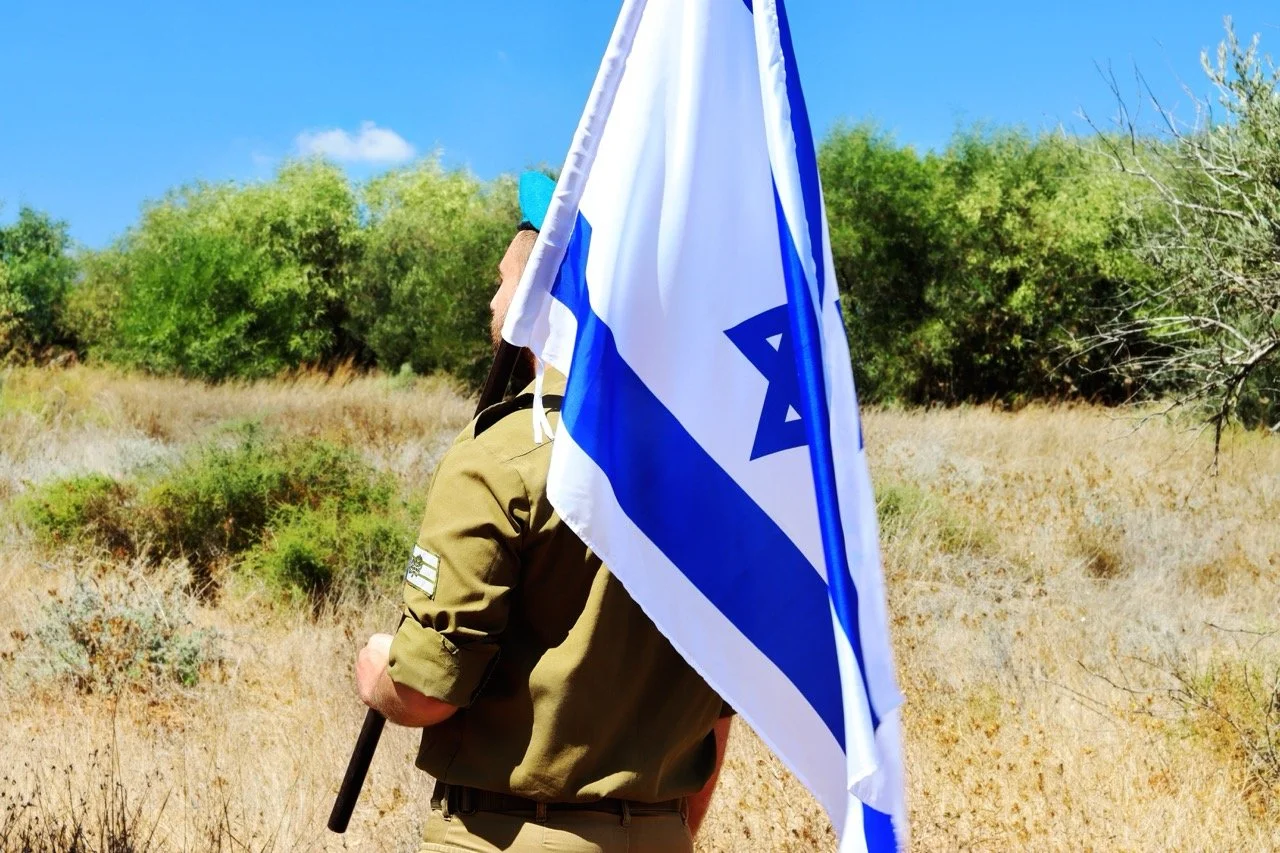
Photo Credit: Shutterstock - Shabtay
John Spencer, The MirYam Institute Senior Analyst On Urban & Asymmetrical Warfare. He is considered one of the world’s leading urban warfare experts and has conducted extensive on the ground research in Israel and Gaza since October 7th. Read full bio here.