
By Yochai Guiski

When Russia invaded Ukraine in 2022 it sent a tidal wave through the world, and especially through the world economy. The price of grains and oils which were produced in Ukraine skyrocketed, as well the prices of Russian gas and oil. The price shock met an already fragile economy suffering from the aftermath of Covid, and was especially hard on European economies that were dependent on Russian energy.
What an unexpected turn of events, right? Who could have foresaw that Russia would decide to invade its longtime neighbor, and who could have seen that Ukraine would close the gas pipelines selling Russian gas to Europe going through its territory?
I guess that when Russia invaded Ukraine in 2014 and annexed Crimea, and then proceeded to foster unrest in the eastern areas of Ukraine wasn’t much of a clue for decision makers.
Not only did European decision makers not view Russia’s actions as a real threat that should warrant them to actively hedge against their growing dependency, but they doubled down on Russian oil and gas, by building the “Nordstream 2” gas pipeline that would have facilitated even more Russian gas into Europe.
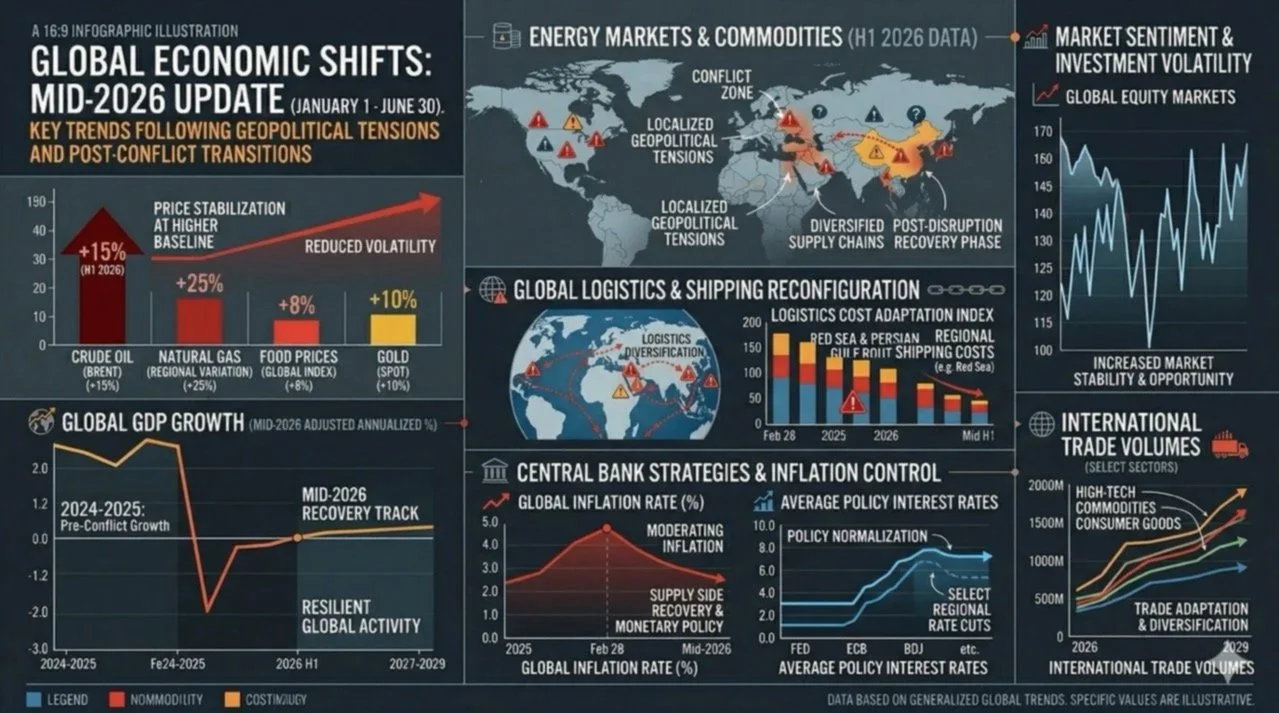
Fast forward to another time and place – the Arbian Gulf in March 2026. Yet again the world, and especially Europe are totally surprised and unprepared to the sudden eruption of hostilities that saw Iran targeting its neighbors’ energy infrastructure and close the Straits of Hormuz, as “retaliation” for an attack by The United States and Israel.
The world economy is yet again seeing a spike in energy prices, and in other oil and gas related products such as Liquefied Petroleum Gas, and certain fertilizers.
What a surprise. As if no one saw Iran attacking or seizing commercial oil tankers near its territory for the past few years, or Iran’s attacks on Israel in April and October 2024, and the war between Israel and Iran on June 2025. And surely no one felt the impact of the Houthi closure of the red sea to commercial traffic.
Did anyone hedge against hostilities and an Iranian attack on its neighbors? How many pipelines leading from the Arab Gulf to the Red Sea were constructed? How many sea ports to facilitate the transportation of oil were built? Or did the world do exactly what it did with Russia and continue as if nothing could possibly go wrong.
There is an important lesson to be learned here. Giving power over the world economy to those who see aggression as legitimate national security policy, do not bulk at using force and undermining peaceful neighbors, and are willing to weaponize their economic influence is never a good idea. Hedging, de-risking and reliable capabilities to defend ones’ interests are not policies to be pursued at leisure, but a strategic imperative, to be prioritized and vigorously implemented.
And what of Israel? How did it react when it was faced with the uncomfortable realities of risk come to bear?
Prior to the October 7th atrocities, Israel sought policies of regional integration, normalization with its neighbors, and reducing tensions even with longtime enemies. Israel signed a maritime deal with Lebanon despite Hezbollah’s threats and provocations (such as sending drones to Israeli gas rigs), and was pursuing the development of economic infrastructure in Gaza and even allowing thousands of laborers from Gaza to work in Israel.
Yet after October 7th Israel learned that its enemies saw its peaceful approach as weakness. It learned that Iran developed a plan with Hezbollah and Hamas to bring about its destruction by simultaneous attacks from all its borders to be executed by its regional proxies. If Hamas hadn’t jumped the gun and prematurely executed its part of Iran’s plan to destroy Israel, Israel might have face a far graver challenge than the one it has already did.
Shaken, but with the utmost resolve and the backing of The United States, our greatest ally, Israel did not shy away from facing the challenge. Even as Hamas, Hezbollah and later the Houthis rained down rockets on its towns and villages forcing hundreds of thousands from their homes, Israel understood that the risk became unmanageable, and was resolved to deal with it despite the cost.
Israel had to grit its teeth and operate in the densely populated Gaza, knowing full well it is sending its soldiers to a dangerous urban combat setting where Hamas has a network of underground tunnels, and that it would be blamed for the civilian casualties that would inevitably occur as a result of Hamas’ tactics of embedding itself in such areas.
Israel had to accept daily rocket and drones from Lebanon and Yemen, and only after dealing Hamas a devastating blow, it went to deal with Hezbollah, while barely responding to two direct attacks from Iran which included hundreds of missiles, drones and cruise missiles.
And then Israel responded. Not accepting the risk management tactic of just intercepting Iranian missiles, but going after Iranian air defenses, nuclear facilities, weapons production sites, and rocket launching capabilities.
And no one thought that it might be a good time to hedge against the possibility of further escalation in the gulf? That Iran, who has already attacked the UAE and Saudi Arabia oil infrastructure in the past, would not do so again?
Israel had to deal with threats that were proven to be unmanageable - Iran chose to seek out the destruction of Israel and set its proxies to do war with it - and was willing to pay the price to defeat these threats.
Blaming Israel for the world’s lack of strategic hedging against Iranian action and blaming it for the hike in oil and gas prices is getting the problem backwards - every nation shouldbe willing to act like Israel in defense of their national security and survival, while states like Iran who hold their neighbors and the world hostage as a policy is where the blame should squarely be placed.
LT. Col. Yochai Guiski is a 25 year veteran of the IDF. He retired in 2020 as a Lieutenant Colonel after serving in the Israeli Military Intelligence. Yochai served in various roles including: Coordination of Government Activities in the Territories (C.O.G.A.T.), Strategic Planning Division and the Ministry of Defense (politico-military directorate). Read full bio here.
Photo Credit: Image created using Gemini AI